
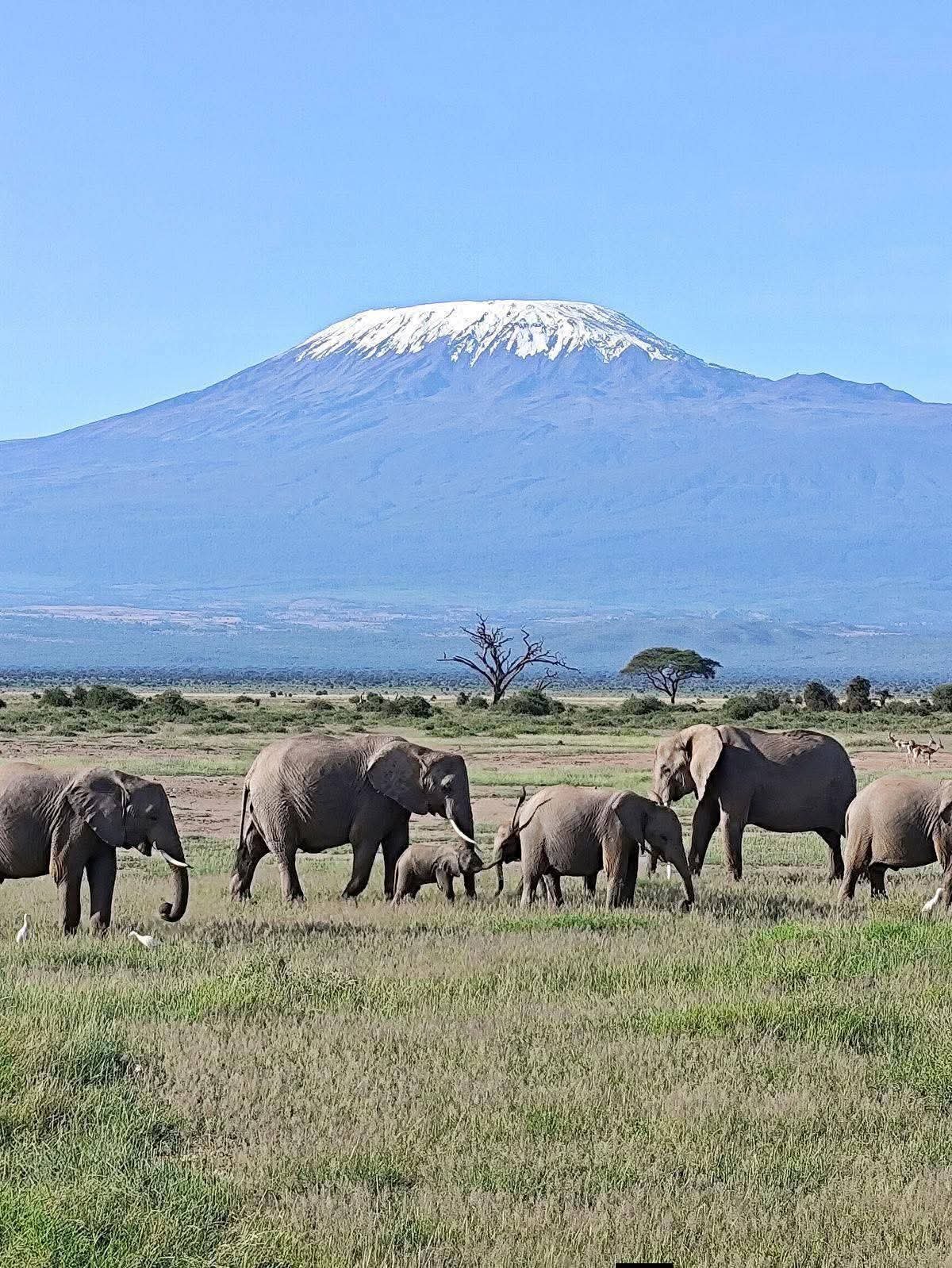
Mount Kilimanjaro
Africa's highest peak at 5,895 metres — a bucket-list trek through five distinct climate zones from tropical rainforest to arctic summit.
Mount Kilimanjaro is Africa's tallest mountain and the world's highest free-standing peak, rising 5,895 metres above sea level from the plains of northern Tanzania. It is one of the few places on Earth where you can trek from equatorial farmland to an arctic glacier summit in less than a week.
Kilimanjaro is a dormant stratovolcano comprising three cones — Kibo (the summit), Mawenzi, and Shira. The mountain supports five distinct ecological zones: cultivated farmland, montane rainforest, heath and moorland, alpine desert, and the arctic summit zone with its iconic glaciers.
Unlike many high-altitude peaks, Kilimanjaro requires no technical climbing equipment — it is a trek, not a climb. However, the altitude demands respect. Proper acclimatisation, experienced guides, and adequate preparation are essential for a safe and successful summit.
Standing on Uhuru Peak at dawn, watching the sun rise over the African continent with the curvature of the Earth visible on the horizon, is a life-changing experience that draws over 50,000 trekkers annually.
Safari Tours & Packages in Mount Kilimanjaro
Explore our curated itineraries that include Mount Kilimanjaro.

Mount Kilimanjaro
Kilimanjaro Lemosho Route Trek
Summit Africa's highest peak via the scenic Lemosho Route — 8 days through five climate zones with expert mountain guides.

Mount Kilimanjaro
7 Days Machame Climbing, One Promise Behind It All
For climbers seeking the best balance between comfort, acclimatization, and summit success, we recommend the 7-day itinerary. The additional day allows your body more time to adjust to the altitude, significantly increasing the chances of reaching the summit safely and comfortably.

Mount Kilimanjaro
Kilimanjaro Marangu Route — The Coca-Cola Climb
Hut Accommodation. Not a Compromise — A Strategy. The Marangu Route is the only Kilimanjaro route with fixed dormitory-style huts at every camp. Sleeping in a solid structure rather than a tent means warmer nights, better rest, and a more comfortable recovery between trekking days — all of which contribute to acclimatisation and summit success.
Wildlife & What You'll See
Kilimanjaro National Park protects diverse wildlife across its ecological zones. The montane forest is home to blue monkeys, colobus monkeys, bushbuck, duiker, and over 179 bird species including the Hartlaub's turaco and silvery-cheeked hornbill.
Above the tree line, eland and buffalo occasionally venture into the moorland zone. The alpine desert and summit zones support hardy species adapted to extreme conditions, though wildlife sightings decrease significantly above 4,000 metres.
How to Get There
Kilimanjaro is accessed via Kilimanjaro International Airport (JRO), which receives direct flights from Europe, the Middle East, and domestic connections. The mountain's gate towns — Moshi and Marangu — are approximately 1 hour from the airport. Arusha, the main safari hub, is 1.5 hours away.
Park Fees & Regulations
Park entry fees are $82.60 per adult per day. Camping fees, rescue fees, and crew fees apply additionally. A typical 7-day trek costs between $2,000–$4,500 per person depending on the route and operator. All fees and permits are arranged by your trekking operator.